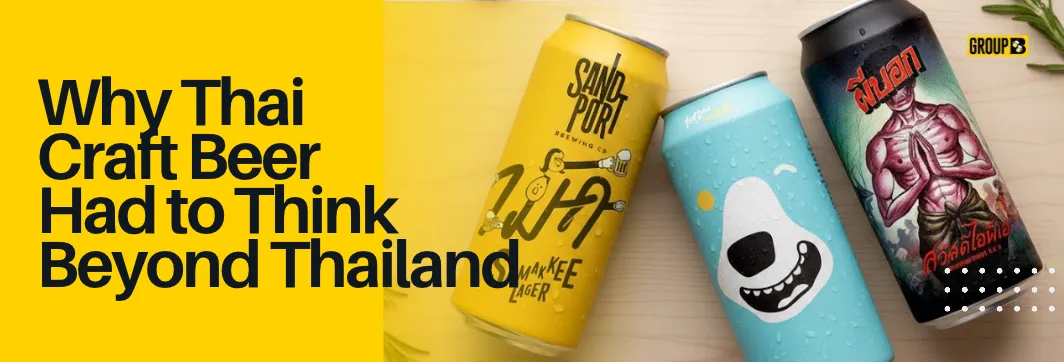
Thai craft beer is still a small part of Thailand’s beer market. But it has been growing steadily.
Across the country, a passionate community of brewers and drinkers has been looking for something beyond the mainstream: more variety, more creativity, and better quality.
Today, there are more than 100 craft beer brands in Thailand, yet together they account for less than 1% of the overall beer market.
Thai craft beer has never been only about different flavors. It has also been about finding space for independent ideas to exist.
Now, some of those ideas are finding new space in America.

More Than a Different Kind of Beer
Thai craft beer is a movement built around choice.
Thailand’s mainstream beer market is dominated by a few large corporations. They benefit from economies of scale, strong brand recognition, and regulatory advantages. Their beers are typically lighter, more affordable, and widely distributed.
Craft beer works very differently. Its growth has been driven by brewers and drinkers who want more variety, creativity, and quality in the glass.
As Hunter of Group B USA puts it, the difference isn’t just in flavor or scale. It’s also in access to opportunity.
That is why Thai craft beer has become more than a product category. It’s a beer, a community, and a movement.
Creativity Within Constraints
The challenge isn’t only making the beer. It’s creating the opportunity to grow.
Independent brewers in Thailand work under some of the strictest alcohol regulations in the world. According to Hunter, those rules include:
- Packaging and distribution: only large macrobreweries can package and distribute beer.
- Advertising: a total ban.
- Sales: limited hours and days when alcohol can be sold.
- Tax: extremely high taxes calculated by retail price, with no support or tax relief for small breweries.
For large producers, scale turns this environment into an advantage. For small brewers, the same market is far harder to navigate.
So Thai craft brewers aren’t only asking what kind of beer do we want to make? They’re also asking how can an independent beer brand find room to grow?
When Thai Ideas Travel
A Thai beer doesn’t stop being Thai because the brewery is somewhere else.
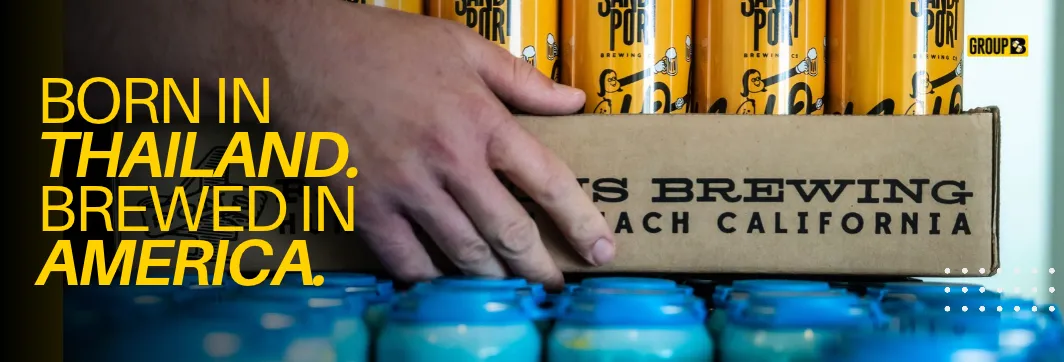
The beers Group B USA is bringing to America weren’t created for the U.S. market. They were originally designed and developed in Thailand by Thai brewers, and they were already available and well received there before production began in the United States.
That’s the idea behind the line:
Born in Thailand. Brewed in America.
The recipes, concepts, brands, and stories began in Thailand. What changes is where the beer is made.
Thai craft brewing is already heavily influenced by Western styles, especially those from the American West Coast, and many ingredients used by Thai brewers are imported from the U.S. or Europe. So brewing in California is a natural fit. It also gives the team better access to fresher, higher-quality raw materials.
Keeping the Beer, Changing the Geography
The location changes. The connection to the original beer stays.
Brewing an existing Thai beer in America does require some adaptation. Ingredient brands or sourcing may change, and natural variations in ingredients and water can make the taste differ very slightly.
The brewing methods, however, stay consistent. Group B USA works closely with its U.S. brewing partners: sharing detailed brewing processes, tasting samples together, and keeping the two teams in constant communication so the final beer matches the original Thai version.
Sometimes the adaptation is deliberate. Yodbeer’s Bearnana Wit began as a happy accident, when its founder tossed leftover Thai sun-dried bananas into a homebrew batch of wheat beer. It has been the brand’s signature beer since 2016. For the U.S. version, the recipe was adjusted slightly, using banana chips, caramel malts, and a touch of banana flavoring, for a more pronounced banana note and the same drinkable character.
The beer may now be brewed in America. Its story still begins in Thailand.
Why California?
A new chapter in America
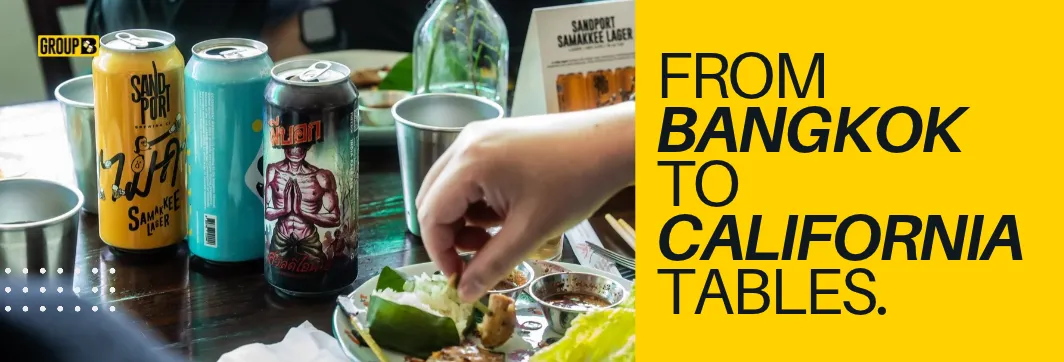
California was a deliberate starting point. Los Angeles, San Diego, and San Francisco have large, diverse Asian populations and a high concentration of Thai restaurants in a wide range of styles. One of Group B’s core partners is also very familiar with the culture and lifestyle of San Diego, which gives the team valuable local insight. That makes food a natural entry point. And while interest in Asian flavors is growing quickly, there are still very few Thai beer options in restaurants and supermarkets, a gap Group B USA sees as a chance to build a fanbase.
Rather than competing head-on with the whole American craft beer market, the company is starting with Thai restaurants, Asian-owned businesses, and the wider hospitality sector. It’s a community that already shares a cultural connection, and a solid foundation to build from.
From the Thai Table to a Wider Table
Thai craft beer can begin with Thai food without ending there.
Food pairing is one of the clearest ways to introduce an unfamiliar beer. But the three beers were chosen in internationally familiar styles (Hoppy Lager, IPA, and Wheat Beer) that work with a wide range of cuisines, including Western dishes and American comfort food like burgers, pizza, and salads.
Hunter’s specific recommendations:
- Samakkee (Hoppy Lager) with tacos. Its crisp, hoppy character cuts through the richness and complements bold, savory flavors.
- Sawasdee (IPA) with grilled steak, especially beef. The bitterness and malt balance lift the meat’s flavor and richness.
- Bearnana (Wheat Beer) with dessert. It pairs surprisingly well with vanilla ice cream, banana-based desserts, or light cakes, bringing out the beer’s fruity, slightly sweet notes.
All three were designed to be approachable and food-friendly, whether you’re eating Thai, American, or anything else. A Thai identity doesn’t have to limit a beer to Thai food.
What Comes Next
Thai craft beer can stay Thai while becoming part of a larger beer culture.
The Thai craft beer market is still small, but it isn’t standing still. Independent brewers have built brands, recipes, and a community around the idea that Thai beer can offer something beyond the mainstream.
America gives those ideas another place to be tested, shared, and discovered. For Group B USA, the goal isn’t to replace the story that began in Thailand. It’s to give that story somewhere new to grow.
Born in Thailand. Brewed in America.
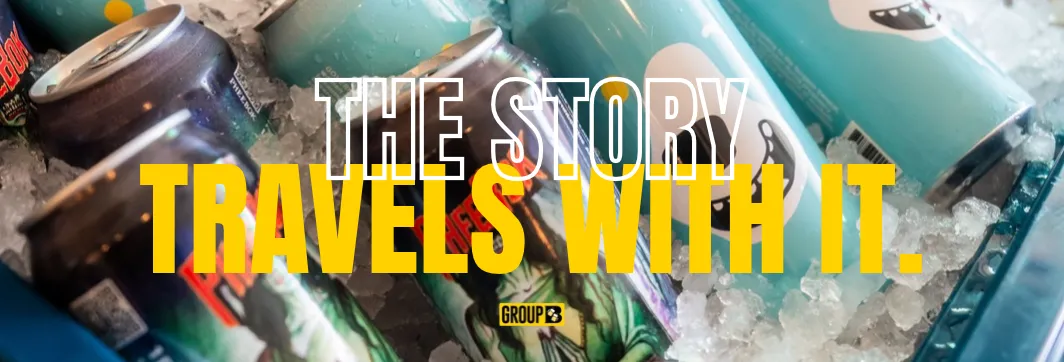
The geography changes. The story travels with it.